Mon, Aug 3, 2026 -
Subscribe & never miss our best posts. Subscribe Now!
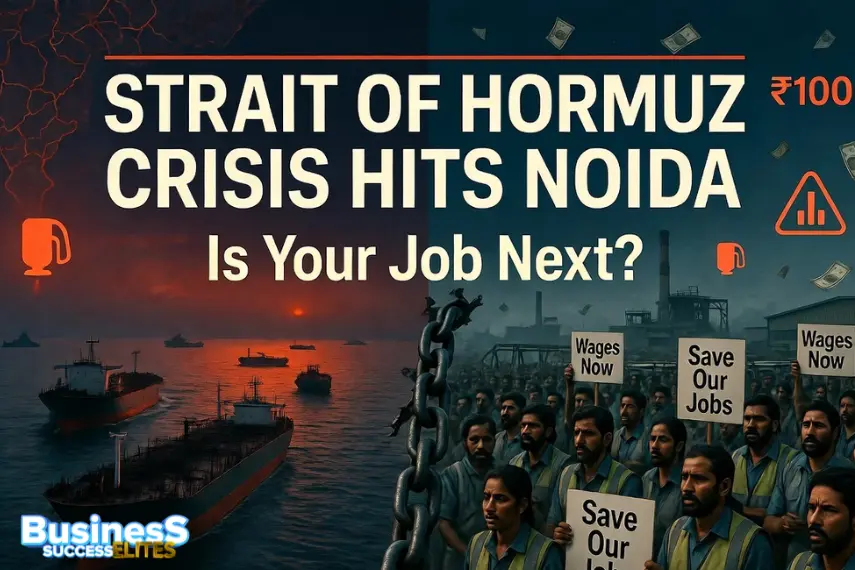
The Strait of Hormuz crisis hits Noida hard, and factories in Greater Noida and the NCR are already feeling the squeeze, with higher diesel prices, delayed shipments, and worried workers wondering if their next pay cheque is safe.
It’s a simple chain reaction. If oil flows through that narrow strait get disrupted, global prices shoot up, and suddenly the cost of running a truck or keeping a machine humming in Sector 63 goes through the roof. For the lakhs of families who depend on Noida’s industrial belts, this feels very real, very fast.
The Strait of Hormuz carries nearly 20% of the world’s crude oil. Right now, US-Iran tensions have slowed tanker movements, pushed up insurance costs, and forced some ships to take longer routes. Brent crude has crossed $100 a barrel, and India, which imports 87% of its oil, is feeling every extra rupee.
For Noida’s small and medium factories—auto parts, electronics assembly, and packaging, the impact shows up quickly. A truck ride from the port that once cost ₹15,000 now adds ₹4,000–5,000 in extra diesel. Raw materials sit longer at ports. Production schedules get shuffled. Owners are already cutting overtime and thinking twice before hiring.
Local manufacturers call it a double blow. On one side, fuel and transport bills are climbing fast. On the other, blue-collar worker numbers dropped 5.6% in the first quarter of 2026, according to job portal data. Factories in Sectors 62, 63, Phase 2, and the Hosiery Complex simply can’t find enough hands at the old pay rates.
Small units that employ most of the region’s workforce are the first to feel the pinch. Night shifts get shorter. Weekend work dries up. And the quiet worry spreads: if this goes on, will the next step be layoffs?
Last week, thousands of factory workers in Greater Noida took to the streets. They want monthly pay to rise from around ₹13,000 to ₹20,000 so they can keep up with higher costs for food, gas, school fees, and daily travel.
What started as peaceful rallies in places like the Hosiery Complex turned tense in a few spots, stones were thrown, vehicles were damaged, police used tear gas. Similar unrest has been reported in parts of Faridabad and Manesar too. One worker told local reporters, “We work 12-hour shifts, but prices keep going up while our salary stays the same. How do we feed our families?”
The Uttar Pradesh government responded fast with a minimum wage hike for unskilled, semi-skilled, and skilled workers, effective from April 1. Haryana made a similar move recently. It has helped, but many say it’s only a short-term fix if oil prices stay high.
For blue-collar families in the NCR, the question feels personal. Factory owners are already rethinking shifts and freezing new hires. Logistics companies, canteens, and local transporters are seeing slower business too.
IT parks might look untouched for now, but when manufacturing slows, the ripple reaches retail shops, services, and even the small eateries that feed the workforce. Economists say India’s strategic oil reserves and extra purchases from Russia have given us some breathing room, maybe 60 days. But if the strait stays blocked longer, talk of diesel rationing could become real.
The country has increased oil buys from more than 40 countries, kept refineries running at full speed, and used strategic reserves to steady supply. Officials say we’re in a stronger position than before because we no longer depend on just one route.
Still, experts warn that long-term high prices could push inflation higher and affect budgets next year. For Noida, the priority right now is simple: keep factories open and people working.
No need to panic, but it pays to be smart. Update your skills, as many factories now want people who can handle more than one machine or learn basic digital tools. Talk openly with your supervisor or union about fair wage adjustments. Keep an eye on daily fuel price updates and any new government schemes for small industries.
On the home front, families are already making small changes: sharing rides to work, buying groceries in larger quantities, or even growing a few vegetables in balcony pots. These steps help when global troubles reach your doorstep.
The Strait of Hormuz crisis hits Noida at a time when the world feels smaller than ever. A problem thousands of kilometres away can change shift timings in Sector 63 overnight. Workers, factory owners, and the government in Uttar Pradesh are working through it together. We’ll keep tracking the latest numbers, street updates, and official moves, so you know exactly what it means for your job and your family.
Japan, US Yen Intervention Signals Historic Currency Truce
August 3, 2026