Mon, Aug 3, 2026 -
Subscribe & never miss our best posts. Subscribe Now!
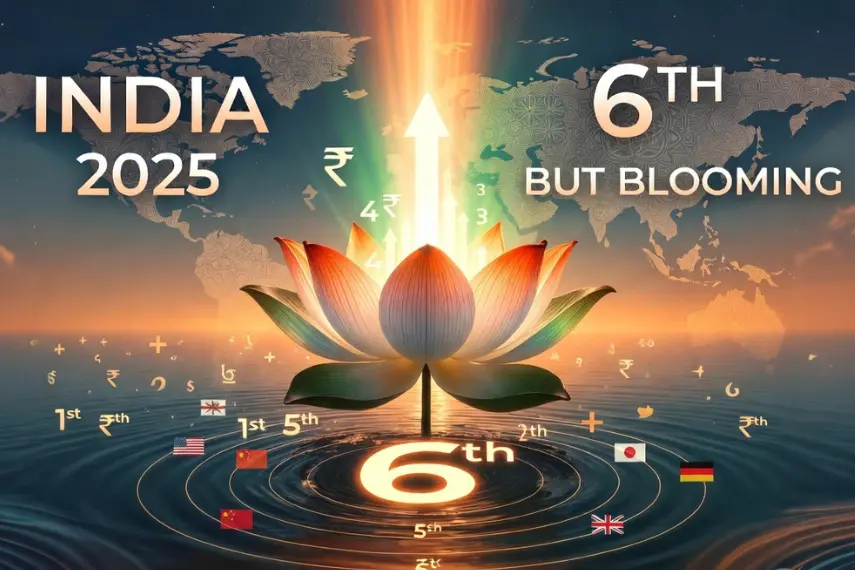
India falls to sixth-largest economy in 2025, and before you start worrying about what it means for jobs, prices, or your future, let’s cut through the noise and look at the full picture with clear eyes.
The numbers from the latest International Monetary Fund update tell a straightforward story. India’s nominal GDP for 2025 is estimated at roughly $3.92 trillion, placing it just behind the United Kingdom at around $4 trillion. A few years back, we overtook the UK and sat comfortably in fifth; now the order has flipped again.
A big chunk of this shift comes down to exchange rates. The rupee weakened around 10 per cent over the past year against the dollar, while the British pound held strong. Since global rankings use US dollar terms, even solid growth in rupees can look smaller on the world stage. Add in a stronger dollar overall, and the math simply moves India down one spot.
India’s own statisticians updated the GDP base year to 2022-23. This routine exercise, meant to reflect the current structure of the economy more accurately, shaved about 3 per cent off the headline size. It’s technical housekeeping, not a sudden collapse, but it showed up loud and clear in the dollar-denominated league table.
Here’s what most short headlines miss: this is not a slowdown story. India remains the fastest-growing major economy on the planet. The IMF has actually raised its forecast for FY27 to 6.5 per cent, even with global uncertainties like rising oil prices and trade tensions. Domestic experts are talking about 7.4 per cent growth in the current fiscal year.
Services are booming, manufacturing is getting a fresh push through production-linked incentive schemes, and digital infrastructure is creating jobs that didn’t even exist a decade ago. UPI transactions, gig work, and rural e-commerce are touching real lives from Coimbatore factories to Bihar villages. Hundreds of millions have already moved out of extreme poverty, and that progress hasn’t paused.
For a young engineer in Bengaluru or a woman entrepreneur in a small town, the rupee value in dollars matters far less than steady jobs, falling inflation, cheaper credit through digital loans, and better roads and electricity. The ranking dip doesn’t change any of that.
By purchasing power parity, the measure that adjusts for what things actually cost inside the country, India stays firmly in third place globally. That tells the true story of 1.4 billion people producing and consuming every single day.
Looking ahead, the IMF’s own numbers keep the bigger dream on track. India is expected to become the fourth-largest economy by FY28 and the third-biggest by 2031. Consistent 6 per cent-plus growth, a young population, rising domestic consumption, and a steady policy focus on infrastructure are the reasons analysts, across the board, remain confident.
Of course, no honest conversation skips the real hurdles. Currency swings can hurt imports and foreign investment sentiment. Global trade friction and the need for faster formal-sector jobs remain pressing. Climate risks and inequality gaps also demand serious attention. But the fundamentals, demographic dividend, digital leap, and reform continuity, give India an edge that few others enjoy.
India falls to the sixth-largest economy in 202 on paper, yes. Yet millions of Indians are quietly building the next chapter: more electric vehicles on the roads, more startups going global, more villages linked by high-speed internet, and more families stepping into the middle class. The world is watching, and the real momentum tells a story of determination, diversity, and steady upward climb. The league table might have shifted for now, but the direction of travel hasn’t changed. India is just getting started.
Japan, US Yen Intervention Signals Historic Currency Truce
August 3, 2026