Sat, Aug 15, 2026 -
Subscribe & never miss our best posts. Subscribe Now!
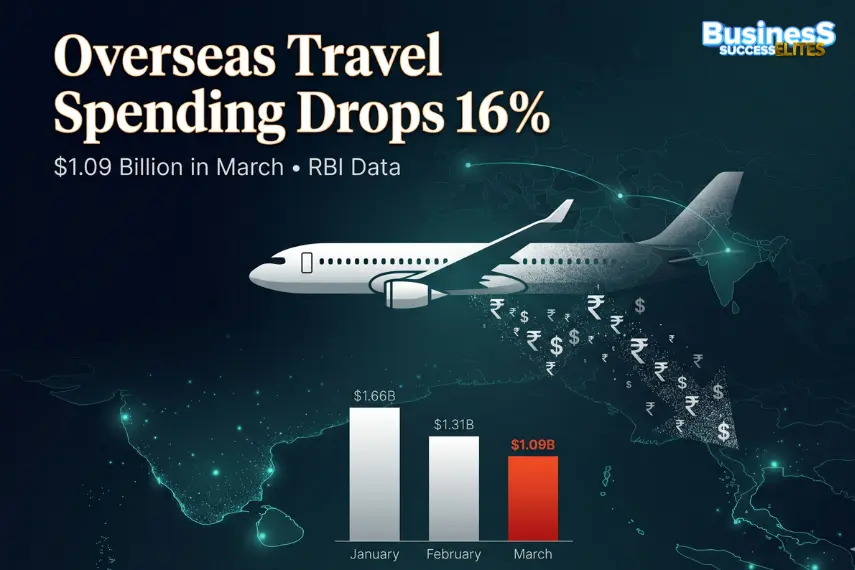
Overseas travel spending by Indians has hit a notable snag, with Reserve Bank of India data revealing a significant 16% dip in March 2026. The sharp decline saw travel remittances fall to $1.09 billion from $1.31 billion in February, marking a troubling trend for India’s tourism-dependent sectors and a concerning sign of the ripple effects from West Asia’s geopolitical crisis. The unexpected pullback has emerged during a period when international borders remain jittery, and families are making tougher choices about vacations, medical tours, and educational pilgrimages abroad.
When you dig into the Reserve Bank’s latest figures on outward remittances under the Liberalised Remittance Scheme (LRS), the bigger picture becomes clearer. In March alone, Indians withdrew a total of $2.59 billion for various overseas purposes, with travel claiming the lion’s share at $1.09 billion. But here’s what stands out: this represents a substantial pullback compared to January’s robust $1.66 billion and February’s $1.31 billion. The consecutive month-on-month decline suggests more than just seasonal adjustment; it points to genuine anxiety among travellers about international logistics and safety.
Where exactly are Indians cutting back? The picture is surprisingly nuanced. The “$other travel” category, which includes leisure holiday trips and international credit card settlements, took the biggest hit, accounting for $623.05 million (57% of total travel outgo). These are the casual trips, the family vacations, the impromptu weekend getaways that tend to be the first to go when wallets tighten.
Meanwhile, education-related travel held relatively firm at $450.16 million, suggesting that parents are prioritising their children’s educational opportunities even as they shelve their own holiday plans. Spending on overseas business travel, pilgrimages, and medical treatment remained minimal at just $21.39 million, indicating that only the essential trips are happening.
What’s driving this retreat? The answer lies in the skies above West Asia. The US-Iran tensions that flared in late February triggered cascading disruptions across global aviation. Popular transit hubs like Dubai and Doha, the lifelines for Indian travellers heading to Europe and the Americas, faced severe operational constraints. The Airports Authority of India reported a startling 18.5% drop in outbound passenger traffic during March, with only 3.4 lakh flyers departing for overseas destinations compared to 65.4 lakh in March 2025. That’s not a gentle slowdown; that’s a wall.
For the average Indian family planning a holiday abroad, these operational headaches translate into cancelled bookings, rerouted itineraries, and the decision to postpone trips altogether. Airlines had to rework schedules, airfares spiked due to fuel costs and limited capacity, and the overall hassle quotient shot through the roof. No wonder travellers decided to sit this one out.
Overseas travel spending by Indians may have dipped, but it remains the highest priority category under LRS remittances. The Reserve Bank’s data shows that during March, Indians also allocated:
Interestingly, while travel spending sagged, investments picked up, suggesting that some Indians may have redirected funds toward financial assets and securities, reading the geopolitical turmoil as a buying opportunity rather than a travel window.
The March 2026 slowdown must be viewed within the context of a strong financial year. During FY 2024-25 (April 2024 to March 2025), Indians remitted an impressive $29.56 billion under the LRS scheme. Travel claimed $16.96 billion of that, nearly 57% of total outward remittances. This underscores just how central international travel has become to middle-class Indian aspirations and family planning.
Before COVID disrupted everything, the highest annual spend on overseas travel stood at $7 billion in FY 2019-20. The $16.96 billion in FY 2024-25 represents more than double that figure, reflecting a fundamental shift in how Indians spend their money and move across borders. Even with March’s dip, the year-on-year trajectory remains decidedly upward.
Prime Minister Narendra Modi has publicly urged citizens to reduce foreign travel and opt for alternative arrangements like carpooling domestically, against the backdrop of oil price volatility and rupee pressures stemming from the West Asia situation. While government messaging emphasises the broader macro benefits, reduced foreign exchange outgo helps stabilise the rupee—real families are making real choices about postponing vacations or reconsidering expensive trips.
The Reserve Bank’s focus on tracking these remittances reflects New Delhi’s keen interest in monitoring capital flows and understanding how households adjust spending in response to external shocks. Every dollar saved on overseas travel is a dollar that doesn’t flee the country’s forex reserves, a fact not lost on policymakers navigating currency stability.
The question now is whether this March dip represents a temporary disruption or a longer-term repricing of overseas travel by Indian consumers. Several factors will shape the answer:
Kalpesh Chauhaan, COO, Arham Secure | Business Success Elites
August 14, 2026Demis Hassabis Exit Google DeepMind | BSE Report
August 14, 2026Video Marketing: Why Returns Are Falling in 2026
August 13, 2026Bank of America Jio Credit Deal: $1.9 Billion India Bet
August 13, 2026