Sat, Aug 15, 2026 -
Subscribe & never miss our best posts. Subscribe Now!
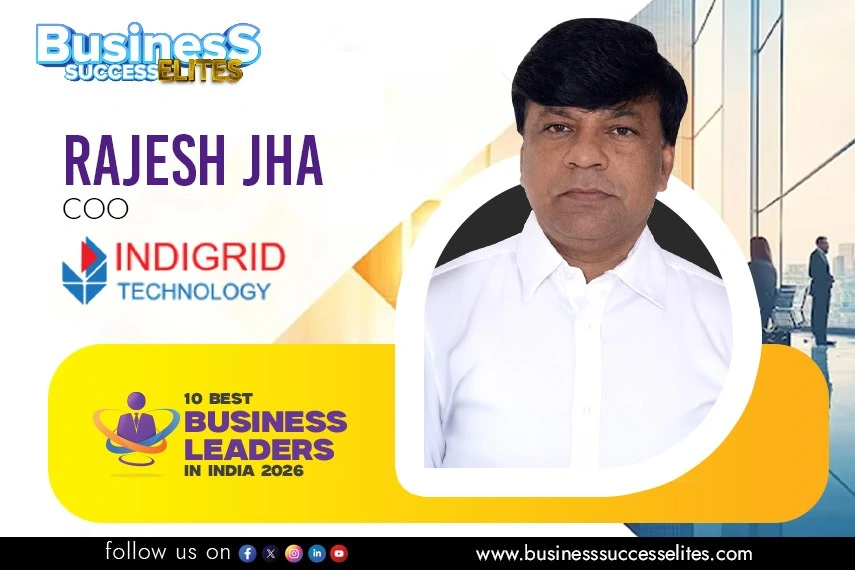
In India’s push to become a global electronics and EV powerhouse, few leaders have stared down chaos and turned it into lasting impact quite like Rajesh Kumar Jha. Early in his career, he stepped into factories plagued by massive inefficiencies including excessive inventories tying up crores, sloppy processes dragging down output, and teams struggling without clear direction. One pivotal turnaround slashed inventory from nearly ₹2.5 crore to just ₹39 lakh in four short months through disciplined lean practices and structured controls. That wasn’t a one-off win; it became the blueprint for how he approaches every challenge: build systems, empower people, and create leaders who sustain excellence long after the fix is in.
Today, as Chief Operating Officer at Indigrid Technology Pvt Ltd. (Gurgaon), a full-stack ESDM player making EV battery packs, motor controllers, DC-DC converters, and more, Rajesh has helped drive real momentum. Under his operational leadership since early 2025, he has spearheaded the scaling of manufacturing operations, strengthened R&D capabilities, and applied his deep expertise in operational excellence to build robust processes and high-performing teams in India’s fast-evolving EV ecosystem.
Certified Lean Six Sigma Black Belt, armed with an MBA from IIM Kozhikode, and now pursuing doctoral research on leadership in tech-driven manufacturing, he lives by a mantra that cuts through the noise: “I manufacture leaders to deliver products.” In an industry obsessed with machines and tech, Rajesh insists the real game-changer is developing capable people at every level. We caught up with him for a straight-talking conversation on the tough lessons, the human side of operations, and what it will take for India to lead in tomorrow’s connected world.
What was a defining moment in your 25-year career that most shaped your approach to strategic leadership and operational excellence?
One standout moment was leading a major manufacturing turnaround where inventory was out of control and operational discipline was weak. We introduced structured inventory systems and lean practices, cutting stock from nearly ₹2.5 crore to about ₹39 lakh in just four months. Beyond quick fixes, it proved that real excellence comes from systems thinking, tight processes, and teams that own their work.
That experience crystallised what I’d learned at IIM and shaped everything since. Operational excellence isn’t luck; it’s deliberate. It led to my personal tagline: “I manufacture leaders to deliver products.” Machines produce goods, but leaders create the culture, discipline, and accountability that make high performance stick. That’s why I keep pushing frameworks like Balanced Scorecards, lean tools, and goal-oriented performance systems, they build leadership capability organisation-wide.
Across your diverse leadership roles, which experiences have most influenced your approach to building and guiding high-impact teams?
I’ve spent nearly three decades in tech-heavy sectors, motherboards, automotive electronics, IoT, 5G telecom infrastructure like massive MIMO platforms. But the experiences that hit hardest were setting up greenfield plants from nothing. You’re not just ramping production lines; you’re forging an entire culture.
Those builds taught me that great products demand great teams, and great teams come from intentional leadership development. It reinforced my core belief: “I manufacture leaders to deliver products.” My IIM exposure in strategic management and organisational behaviour helped refine that view. Even now, while running operations at Indigrid, I’m doing PhD research on how leadership frameworks intersect with technological shifts in manufacturing. It keeps the focus on people amid all the tech.
In your view, how important is continuous improvement in quality and operations, and what strategies have proven most effective in your career?
Continuous improvement is essential, it’s what keeps any manufacturing company competitive globally. Quality and efficiency aren’t nice-to-haves anymore; they’re table stakes.
I’ve implemented Lean, Value Stream Mapping, Kaizen, and Balanced Scorecards many times, they drive real gains. But the strategy that truly sticks is making improvement leadership-driven. When people on the floor feel accountable not just for output but for better ways of working, the organisation gets agile and innovative fast.
That’s why I put leadership development first. Grow leaders instead of just operators, and continuous improvement becomes natural, not forced. It’s the link I’m digging into deeper in my doctoral work, how stronger leaders lift quality and operations sustainably.
In your article on “Why 5G is the future,” what opportunities and challenges do you see in the 5G ecosystem?
5G goes way beyond speed. It’s the enabler for smart factories, industrial IoT, connected vehicles, and real-time AI at the edge. Factories, cars, and devices will talk and decide instantly, transforming how we produce and move things.
The opportunities are huge for industrial growth. But challenges are real: massive infrastructure spend, rapid evolution of telecom hardware manufacturing, and regulations that must catch up. From both my industry role and research perspective, success in 5G will go to those who blend top tech with strong operational leadership. Developing leaders is as critical as rolling out the network.
What gaps do you currently see in manufacturing processes, quality standards, or technology adoption, and how do you approach bridging them strategically?
A big gap today is the mismatch between adopting new tech like IOT, automation, AI and being organisationally ready to use it well. Companies invest heavily but often skip the cultural and skill shifts needed to get full value.
Another is the divide between high-level strategy and shop-floor reality. Strong visions fail without execution discipline and leadership depth.
My approach: integrate strategy, technology, and leadership growth together. Align business goals with practical systems, build workforce skills, and deploy digital tools for real-time decisions. Ultimately, the manufacturers who win will be those growing leaders at every level, because when leaders thrive, innovation, quality, and productivity follow.
Kalpesh Chauhaan, COO, Arham Secure | Business Success Elites
August 14, 2026Demis Hassabis Exit Google DeepMind | BSE Report
August 14, 2026Video Marketing: Why Returns Are Falling in 2026
August 13, 2026Bank of America Jio Credit Deal: $1.9 Billion India Bet
August 13, 2026