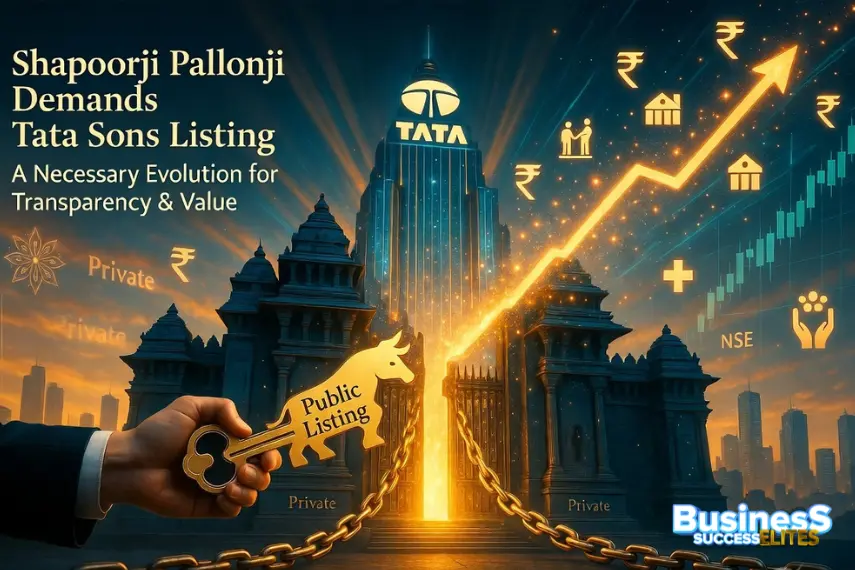
Shapoorji Pallonji demands Tata Sons listing once more, and this time the message feels even more pointed. On April 10, 2026, Shapoorji Pallonji Mistry, Chairman of the Shapoorji Pallonji Group, issued a detailed statement reiterating that a public listing of Tata Sons isn’t merely about ticking an RBI box. It is, he says, “a necessary evolution” that would reinforce the very foundations the Tata Group has always stood for—corporate governance, transparency, and accountability.
The SP Group, which holds roughly 18.37 per cent in Tata Sons, has been consistent on this for months. Back in October 2025 they raised the same point amid some internal rumbling inside the Tata Trusts. Now, with the RBI gearing up to finalise fresh category norms for NBFCs, the demand has returned with fresh urgency.
Mistry’s full statement leaves little room for ambiguity. He wrote: “To date, no clear, evidence-based case has been presented to explain how a public listing would materially damage the interests of the trusts or reduce their ability to serve beneficiaries.
The listing of Tata Sons is fundamentally in the public interest. A publicly listed holding company strengthens board accountability, broadens the investor base, and secures long-term value for all stakeholders.” He went further, noting that listing would “unlock value for millions of retail shareholders, create a more defined and robust dividend stream for the Tata Trusts, and expand the social and philanthropic impact that benefits the poorest sections of our country.”
For anyone following the Tata story, this isn’t just another corporate tussle. Tata Sons sits at the heart of a $180-billion empire that touches everything from salt and software to cars and coffee. The Tata Trusts control about 66 per cent, giving them majority say, but the SP Group’s stake is the single largest private holding. Over the years, the family has used that position to push for greater openness, especially after the well-documented differences that surfaced following the late Cyrus Mistry’s tenure.
What makes the latest push particularly interesting is the quiet shift inside the Trusts themselves. Recent reports suggest vice-chairmen Venu Srinivasan and Vijay Singh have openly backed the idea of listing, arguing it would help the group raise capital for its growing, capital-intensive businesses. Chairman Noel Tata, on the other hand, is understood to prefer keeping the holding company private. That divergence has widened the conversation beyond the usual SP-versus-Trusts narrative and turned it into a broader debate about the future structure of one of India’s most iconic business houses.
Tata Sons was earlier classified as an upper-layer NBFC, which came with a September 30, 2025 deadline for listing. The company moved to surrender that classification, repaid over ₹20,000 crore in debt, and turned cash-positive to stay private. Yet the SP Group maintains that complying with the spirit of the regulation would actually strengthen the group rather than weaken it.
Mistry has expressed “full faith in the Government of India and the Reserve Bank of India to act decisively” while also noting that the SP team remains in “constructive engagement” with Tata Sons leadership for an amicable way forward.
From an investor’s lens, the potential upside is hard to ignore. A listed Tata Sons would give retail shareholders of listed Tata companies (think TCS, Tata Motors, Tata Steel) indirect access to the holding company’s value. It could also bring greater market discipline, clearer valuation, and possibly easier access to capital for future growth. For the Trusts, a stable dividend policy could mean more predictable funding for their massive social initiatives—hospitals, education, rural development that have quietly shaped modern India for decades.
Read more – World Bank Raises India’s FY27 Growth Forecast to 6.6%
Critics of the move worry about loss of control, increased regulatory scrutiny, and the risk of hostile takeover attempts in a listed entity. The SP Group counters that no evidence backs such fears and that the Tata ethos of trust and public purpose would only be reinforced by greater openness.
The very next trading session saw select Tata group stocks like Tata Investment Corporation and Tata Chemicals jump as much as 8 per cent, reflecting how keenly the street is watching this saga.
Whether the listing actually happens will depend on how the RBI frames its new NBFC norms and whether the Trusts reach a consensus internally. For ordinary Indians who hold Tata shares in their demat accounts, work in Tata companies, or benefit from the Trusts’ philanthropy, this isn’t an abstract boardroom drama.
It’s about whether one of the country’s most trusted business names will embrace the next chapter of transparency and broader ownership or stay behind closed doors. The coming weeks, as the RBI clarifies its stance, could decide exactly which path the Tata story takes next.
In the end, Shapoorji Pallonji Mistry’s words sum it up neatly: this group was built on trust, integrity, and public purpose. A listing, he believes, would only make that foundation stronger. India’s markets, its millions of small investors, and the larger cause of good governance will be watching closely to see if the rest of the Tata family agrees.