Sun, Aug 2, 2026 -
Subscribe & never miss our best posts. Subscribe Now!
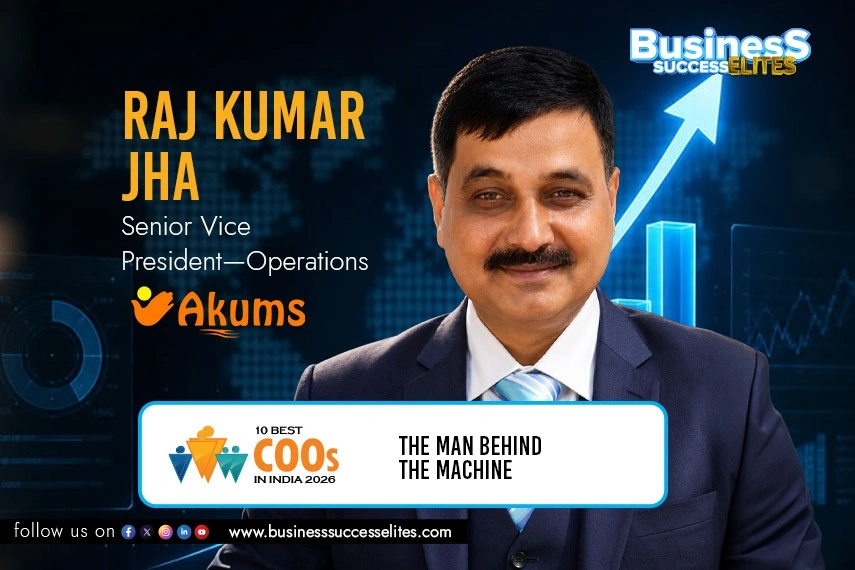
The Man Behind the Machine
In 2016, the US FDA issued a damning import alert against a major Indian pharmaceutical facility, not for one catastrophic event, but a pattern of small, accumulated compromises in data integrity and quality systems. It reverberated through the industry, forcing boardrooms from Hyderabad to Haridwar to confront an uncomfortable truth: a quality culture is not what you document; it is what you do when nobody is watching.
Raj Kumar Jha, Senior Vice President — Operations at Akums Drugs & Pharmaceuticals, has spent much of four decades thinking about exactly that question. His career spans some of India’s most respected pharma companies, moving from Production Chemist to leading large-scale manufacturing operations. Today, at Akums, India’s largest Contract Development and Manufacturing Organisation, he oversees an operation of considerable scale, serving hundreds of domestic and global clients. We sat down with him to understand how to build an operation that holds up under inspection and under pressure.
You’ve built your career across India’s leading pharma companies. What did you have to consciously unlearn each time you moved?
The belief that operational excellence looks the same everywhere. Early on, I assumed a successful process could be replicated elsewhere with minor tweaks. Experience taught me otherwise; every company has its own history, model, and constraints. The mistake leaders make is arriving with solutions before understanding the problem.
I moved from Production Chemist through plant leadership and large-scale operations management, and one lesson stayed with me: people support what they help create. Sustainable transformation doesn’t come from imposing a model; it comes from understanding the shop floor and building solutions with the people who execute them daily. Now, I spend more time observing than speaking; culture reveals itself in everyday actions, not presentations. Experience is valuable not because it gives answers, but because it teaches which questions to ask.
Akums is India’s largest CDMO. Where does the operations leader’s job end, and the impossible begin?
The impossible begins when a leader believes operations can be controlled entirely through systems and authority. In reality, operations is the management of uncertainty; raw material disruptions, regulatory changes, or equipment failures can alter a business’s course within hours.
An operations leader can’t eliminate uncertainty; that’s impossible. The job is to build an organisation that can absorb shocks without compromising quality, compliance, or customer commitments.
I’ve come to believe resilience matters more than efficiency. A highly efficient operation that cannot adapt under stress is fragile; a resilient one may sacrifice short-term optimisation but delivers long-term performance. The real responsibility isn’t being the smartest person in the room; it’s building an organisation where people consistently make the right call, even when you’re not there.
Indian pharma has faced heavy regulatory scrutiny. How do you build a quality culture that holds when no regulator is in the room?
Manufacturing sites don’t fail inspections during audit week; they fail months, sometimes years, before that. An inspection merely reveals the culture that already exists.
Most quality failures begin small: a deviation not investigated deeply enough, a recurring issue normalised because targets are pressing, a procedure on paper that isn’t followed with equal rigour on the floor.
Quality culture is built when employees believe doing the right thing will always be supported, even at short-term cost. If an operator reports a deviation, the reaction shouldn’t be “Why did this happen?” but “Thank you for identifying it.” Quality becomes sustainable only when people stop treating it as the Quality Department’s job and start treating it as their own.
How are you thinking about automation, digitisation, and AI on the manufacturing floor?
I sometimes joke that pharma talks more about AI than it actually uses. Every conference features artificial intelligence, predictive analytics, and Industry 4.0, exciting developments, but leaders must separate real value from fashionable terminology. Technology’s purpose isn’t to make an organisation look modern; it’s to solve operational problems.
Digitisation has already transformed data integrity, batch tracking, and performance monitoring, and AI will further strengthen predictive maintenance and demand forecasting.
But I remain pragmatic. Not every process needs artificial intelligence; a disciplined process improvement sometimes delivers more value than an expensive technology deployment. The best digital transformations are almost invisible; they quietly improve decision quality, supporting excellence rather than replacing it.
You’re based in Haridwar, a city that runs on an entirely different rhythm from the corporate world. Does that influence how you lead?
Absolutely. Manufacturing involves constant pressure and urgency. Being in a city that reminds you of continuity and balance creates a valuable counterweight, a reminder that leadership isn’t just about hitting targets, but about building something sustainable.
Haridwar also reinforces humility. No individual achievement is larger than the collective effort behind it; every successful operation is built by thousands working toward a common purpose. That perspective shapes how I lead, calm during challenges, balanced during success, and focused on developing people who will lead long after my tenure ends.
Leadership, in the end, is measured not by the systems you manage but by the people and culture you leave behind.
Hitesh Agarwal, COO, ACE | Business Success Elites
August 1, 2026