Tue, Jul 14, 2026 -
Subscribe & never miss our best posts. Subscribe Now!
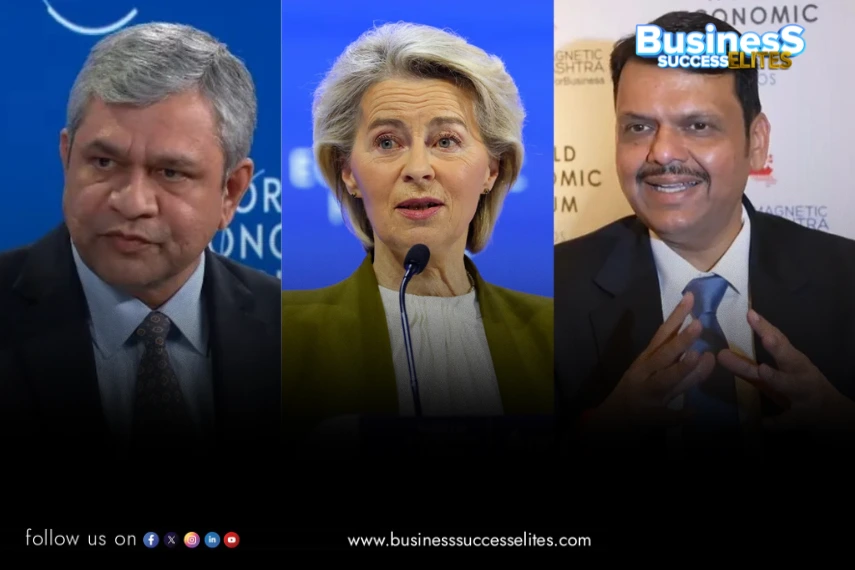
India’s presence at Davos this year felt different. More focused. More confident. And backed by substance.
That clarity came into sharp view after European Commission President Ursula von der Leyen said the European Union is close to finalising a long-awaited trade agreement with India, calling it what many in Brussels describe as “the mother of all deals”.
Speaking at the World Economic Forum, von der Leyen confirmed she will travel to India immediately after Davos. While she acknowledged that negotiations are not fully complete, her message was clear. The deal is approaching a political conclusion.
If finalised, the India–EU trade agreement would link nearly two billion people and represent roughly a quarter of global GDP. In a world where supply chains are shifting and trade blocs are hardening, that scale matters.
The symbolism of the moment is matched by timing. Von der Leyen and European Council President Antonio Costa are scheduled to visit India from January 25 to 27, aligning with Republic Day celebrations and a high-level summit with Prime Minister Narendra Modi.
According to PTI, both sides are expected to announce the conclusion of negotiations at the India–EU summit on January 27. For investors and businesses, that date is now the key marker.
The EU is already India’s largest trading partner, with bilateral goods trade reaching $135 billion in FY2023–24. But the agreement goes well beyond trade volumes.
Talks are expected to cover defence cooperation, strategic alignment, and long-term security frameworks. Reports suggest the two sides may unveil a defence partnership, a security of information agreement, and a joint strategic roadmap running through 2030.
For India, this is about securing access, technology, and strategic depth. For Europe, it is about building resilience and gaining early footing in one of the fastest-growing major economies.
While national diplomacy set the tone, Indian states used Davos to make their own case to global capital.
Maharashtra led the charge, announcing 19 memorandums of understanding worth ₹14.5 lakh crore. The state government projects over 15 lakh jobs from these commitments, spanning logistics, consumer goods, green steel, and digital infrastructure.
Chief Minister Devendra Fadnavis held direct meetings with global firms including Coca-Cola, Brookfield, and Antora Energy, reinforcing a hands-on approach to investment conversations.
One of the standout visuals from Davos this year was the scale of India’s political presence. Union ministers and leaders from around ten states shared the same platform at the India Pavilion.
Andhra Pradesh Chief Minister N Chandrababu Naidu framed the pitch bluntly. India, he said, can move from being the world’s fourth-largest economy to the largest by 2047, but only if it acts with urgency.
That message resonated in a Davos environment dominated by geopolitical uncertainty. India positioned itself as a stable, long-term growth story at a time when predictability is in short supply.
Beyond trade and investment headlines, another theme ran through India’s Davos narrative. Capability.
GIFT City was positioned not only as a financial hub, but as an emerging base for global capability centres, innovation hubs, and centres of excellence. According to CNBC-TV18, the ecosystem already hosts 37 banks and nearly 200 asset management entities, employing around 27,000 people. The target is 100,000 jobs by 2030.
In technology services, TCS highlighted its AI-first approach as a productivity and reskilling strategy, not a headcount reduction exercise. CEO K Krithivasan stressed that AI adoption is being framed as transformation, not disruption.
NDTV reported that seven Indian corporate leaders were invited to a reception hosted by US President Donald Trump at Davos. Leaders from Tata Sons, Infosys, Wipro, and Bharti Enterprises were among those present.
The message was subtle but important. Indian business leaders are no longer just participants in economic discussions. They are increasingly present in rooms where trade, technology, and geopolitics intersect.
The real test comes on January 27.
If India and the EU formally announce the conclusion of negotiations, India leaves Davos with more than visibility. It leaves with clarity. Clearer trade rules. Deeper market access. And a long-delayed agreement finally moving from discussion to execution.
For global investors and corporate leaders, that is the kind of headline that changes planning decisions.
The Odyssey Mumbai Premiere: Nolan’s India Debut
July 14, 2026How the Asian Financial Crisis Rewired Southeast Asia
July 13, 2026